Picture a nine year old who tears up his spelling test, then sits at his desk with his fists balled and says, “I’m fine.” He isn’t fine. He just didn’t have a single word, or a single move, for what was happening inside him. That’s the gap coping skills worksheets for kids try to fill. Used well, they give children a calm moment to name a feeling, pick a strategy and practice it before the next storm. This guide is for parents and teachers who want to use worksheets without turning them into homework nobody wants.
Quick picks
| Product | Best for | Price | Link |
|---|---|---|---|
| Calm Compass Kids Self-Regulation Bundle | Kids ages 7 to 12 | $11.95 | View |
| Little Lighthouse Self-Regulation Book for Kids 3-7 | Kids ages 3 to 7 | $9.99 | View |
What coping skills worksheets for kids actually do
A worksheet is a structured pause. It slows a fast, messy feeling down to something a child can look at on paper. What happened? Where did I feel it in my body? What did I do? What could I try next time?
That’s it. Four questions, answered in a few minutes. Done regularly, those questions build a habit of noticing before reacting. And noticing is the first coping skill, the one all the others rest on.
What worksheets can’t do is fix a feeling in the moment. A child mid-meltdown won’t fill in a box. So the best use is in calm time, and the best sheets are short, friendly and a little bit fun. If a page looks like a tax form, kids will hide it in their bag.
Which coping skills to teach first
You could teach fifty strategies. Please don’t. Start with a small toolkit in three groups.
Body skills
Slow breathing, stretching, squeezing hands into fists and letting go, or pushing against a wall. These work fast because they speak to the body, which is where big feelings start.
Thinking skills
Naming the feeling, rating how big it is from one to five, and swapping an unhelpful thought for a kinder one. “I always mess up” becomes “I messed up this one and I can try again.” Older kids take to this more easily than young ones.
Doing skills
Drawing, listening to music, walking, asking for a hug, talking to a trusted adult. This group matters because it tells kids that asking for help is a coping skill, not a failure.
Pick one from each group and practice them for a few weeks. After that, add more. A child with three tools they actually use is far better off than a child who has heard of thirty.
How to use coping skills worksheets for kids step by step
Here’s a routine that works at a kitchen table or on a classroom rug.
Step 1: Pick a calm time
After a snack, before bed or during a quiet reading block. Never right after an incident. Wait until the child is relaxed and ready to chat.
Step 2: Sit with them the first few times
Read the page aloud. Let them answer in words, pictures or a mix. For younger kids, you might write while they talk. The point is the thinking, not the handwriting.
Step 3: Keep it short
Ten minutes is a good ceiling. Five is better for the early weeks. Stop while they still have a little energy left. Leaving them wanting more is a good thing.
Step 4: Connect it to real life
When a hard moment comes, gently point back. “Remember the breathing page? Want to try it?” Don’t force it. An invitation works better than a command.
Step 5: Review and celebrate
Once a week, flip through the finished pages together. Ask which skills helped most. Praise effort, not perfection. A sticker or a high five goes a long way with a seven year old, and more than they’d admit with a twelve year old.
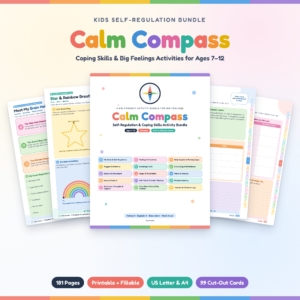
Calm Compass Kids Self-Regulation Bundle
Price: $11.95 | Best for: Kids ages 7 to 12
A 181-page bundle of coping skills and emotional regulation worksheets, calm down cards and trackers, made for ages 7 to 12. It comes as a printable and fillable PDF in US Letter and A4, so you print what you need and keep the rest.
Coping skills worksheets for kids in the classroom
Teachers have a harder job: twenty five children, one clock, and a curriculum to cover. Coping skills worksheets for kids can still fit into that packed day with a few small habits.
Use a short check-in at the start of the day. A feelings scale from one to five on a slip of paper takes two minutes and tells you who needs extra care. Keep a small stack of coping pages near a quiet corner so a child who’s overwhelmed can pick one up without making a scene.
Try a weekly coping skill. On Monday, introduce slow breathing. Practice it as a class before spelling. On Friday, ask who used it. Over a few weeks, children may tell you they used a skill outside class, on the bus or at home. That kind of thing sticks.
And protect privacy. Some pages ask kids to write about private feelings. Let children keep those folded or in a folder, and never read them aloud without permission. Trust is the whole thing here.
What a good page looks like
You can judge coping skills worksheets for kids in about ten seconds. Look for a clear title, a small amount of text, plenty of white space and one job per page. A page about anger should help with anger, and nothing else. Pages that try to do five things leave kids staring.
Here are a few formats that tend to work. A feelings thermometer, where a child colors how hot they feel. A “body map” outline to mark where a feeling sits, maybe tight shoulders or a hot face. A choose-your-tool page with three boxes to tick. A plan page that finishes the sentence, “When I feel ___, I can ___.” And a tracker, where a child puts a sticker each time they used a skill. Trackers look humble, but they quietly turn a skill into a streak, and kids love a streak.
Think about the look, too. Sheets that are too busy overwhelm a child already running hot. Sheets that are too plain feel like school. Aim for friendly and calm, with room to doodle. Honestly, the doodling is half the value for some kids. A child who colors the edge of the page while talking is often thinking hard.
Picking the right worksheets for the age
Age changes everything when you choose coping skills worksheets for kids. A five year old can’t read a page of text. A twelve year old will roll their eyes at cartoon bears.
For ages 3 to 7, you want big pictures, very little writing, and lots of coloring or circling. Think more play than paperwork. A book that you read together and revisit works well, because the adult carries most of the load.
For ages 7 to 12, you can use writing prompts, scales, trackers and cards. Children this age like having a say in what they work on, and they love a visible record of progress. Let them choose which page to do. Choice gives them a sense of control, and control is exactly what a dysregulated child is missing.
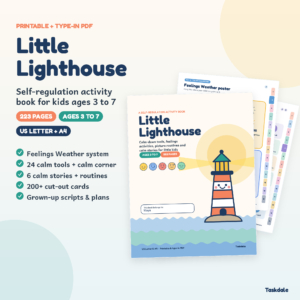
Little Lighthouse Self-Regulation Book for Kids 3-7
Price: $9.99 | Best for: Kids ages 3 to 7
A 223-page self-regulation book written for kids 3 to 7. It suits parents and teachers of little ones who want one big resource for feelings and calming skills in place of a pile of loose pages.
Signs the worksheets are working (and when to change course)
Don’t expect a miracle in a week with coping skills worksheets for kids or anything else. Look for small shifts.
- Your child names a feeling without being prompted.
- Meltdowns are shorter, even if not fewer.
- They ask for a breathing break or a quiet space on their own.
- They can tell you what helped last time.
If after a month nothing has changed, adjust. Maybe the pages are too long, or too babyish, or the timing is off. Maybe your child needs a different type of skill, more movement and less writing. That’s fine. You’re not failing, you’re experimenting.
And know when worksheets aren’t enough. If your child hurts themselves or others, avoids school, can’t sleep or seems sad or worried most days, talk to your doctor or a child counselor. Printables are self-help tools. They support good care. They don’t stand in for it.
Common mistakes with coping skills worksheets
No judgment, these are easy to fall into.
Turning the page into a punishment. “Go fill out your worksheet” after a blow-up feels like a lecture on paper. Keep them in calm time, and keep them invitational.
Doing too many at once. Five sheets in a sitting will wear anyone out. One is plenty.
Correcting the answers. If a child writes “I hit him because he’s mean,” don’t mark it wrong. Say, “Tell me more.” You want honesty first. Skills can come after.
Skipping the practice. Writing about breathing is not the same as breathing. Do the thing together, right there, after you fill in the box.
Forgetting to model. If you never use a coping skill in front of your child, they’ll wonder why they have to. Say it out loud: “I’m tense, so I’m going to stretch.”
Compare the printable options
If you’d like ready made pages instead of building your own, here’s how two Taskdale options compare.
| Product | Format | Price | Best for | Link |
|---|---|---|---|---|
| Calm Compass Kids Self-Regulation Bundle | Printable & fillable PDF, 181 pages | $11.95 | Kids ages 7 to 12 | View |
| Little Lighthouse Self-Regulation Book for Kids 3-7 | 223-page book | $9.99 | Kids ages 3 to 7 | View |
This article is general information, not professional advice, and these worksheets are self-help tools, not a replacement for a therapist or counselor.
Coping skills worksheets: your questions answered
What age are coping skills worksheets best for?
Worksheets with writing work best from about age seven up to twelve, when children can read and write short answers. Younger children do better with picture based pages and an adult guiding them. Choose the style by your child’s reading level, not just their age.
How often should kids use coping skills worksheets?
Two or three short sessions a week is a good start. Ten minutes is plenty. Regular and brief beats long and rare. If your child enjoys it, you can add more, but never turn it into a chore that causes dread.
Can worksheets replace therapy for anxiety or anger?
No. Worksheets are self-help tools that can support everyday skill building at home or school. If a child has intense, frequent or worrying feelings, a doctor or child therapist should be involved. Printables can work alongside professional care, not instead of it.
Should I print everything at once?
No. Print a few pages at a time and let your child pick. A large bundle works best as a library you dip into. Print the cards and a tracker first, then add worksheets as the need comes up.
Are these worksheets okay for group use?
Many pages work well with small groups or a whole class, especially breathing, feelings scales and brainstorming strategies. Check each product’s terms before copying for several classrooms, and keep personal reflection pages private for each child.
Start with one page this week
You don’t need a big plan. Coping skills worksheets for kids work because they turn a vague idea into a small, repeatable habit. Choose a calm moment, sit down with your child, and fill in one page together. Then try the skill they picked next time a hard feeling shows up. If your child is 7 to 12, the Calm Compass Kids Self-Regulation Bundle gives you worksheets, calm down cards and trackers in one printable file. For a younger child, the Little Lighthouse book is the gentler way in.