January energy is cheap. By March it’s gone, and the weight loss plan that felt so solid is a crumpled note in a drawer. A year is a long time, and most plans are built for a few weeks. That’s the gap a 52 week weight loss tracker fills. It breaks the year into 52 small check-ins, one a week, so you can see where you are without living on the scale. Here’s how to plan a full year of weight loss with a tracker, set goals you can really keep, and handle the weeks that go sideways.
Quick picks for a 52 week weight loss tracker
| Product | Best for | Price | Link |
|---|---|---|---|
| Scale Story 52-Week Weight Loss Tracker Printable | A full year of weekly weigh-ins with a progress graph | $1.67 | View |
| Step On Weigh-In Journal | A simple printable weigh-in log | $1.29 | View |
| Rosewater Printable Weight Loss Planner | A short tracker, journal and pounds lost chart | $2.19 | View |
Why a 52 week weight loss tracker works better than a short plan
Short plans have a built-in problem. They end. You push hard for 30 days, you reach the last page, and then what? Without a next step, most people drift back to old habits within weeks.
A year-long view changes the rhythm. You stop treating weight loss like a sprint and start treating it like a slow walk. Each week is just one square. If one square goes badly, there are 51 more. That’s a gentle thought, and gentle thoughts keep people going.
There’s also a practical reason. Real weight change is slow and bumpy. A person can do everything right for two weeks and see nothing, then drop two pounds in one. If your tracker only covers a month, you’ll miss the shape of the whole curve. Over a year, the trend shows up clearly, and the bumps look like what they are: noise.
Finally, a year gives you room for life. Holidays, vacations, busy work seasons, a cold that flattens you for a week. A good plan expects these things and keeps going anyway.
How to set up your 52 week weight loss tracker
Setting up takes about ten minutes, and it’s worth doing carefully. Here’s the process.
Write down your starting point
Weigh yourself on a normal morning, ideally before eating and after using the bathroom, and write it in week one. Don’t pick the heaviest day you can remember or the lightest. Just an ordinary one. Add the date, too. If measurements matter to you, take those the same day.
Choose a realistic goal
Many health organizations suggest slow, steady loss as a safer pace than fast loss, though the right target depends on you. A doctor or dietitian can help you set one. As a general idea, a year is plenty of time for a modest, sustainable change, so there’s no need to rush. Write down the goal in one sentence at the top of the page.
Pick your weigh-in day
Choose one weekday and stick to it. Mondays are popular because they follow the weekend and set the tone for the week. But the best day is whichever one you’ll actually remember. Put it in your phone calendar with a reminder.
Mark the milestones
Divide the year into quarters. At weeks 13, 26, 39 and 52, pause for a longer review. How are your habits? What’s changed? What do you want to change? These checkpoints turn one long project into four manageable ones.
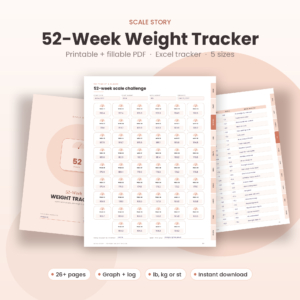
Scale Story 52-Week Weight Loss Tracker Printable
Price: $1.67 | Best for: logging a full year of weekly weigh-ins with a progress graph
A printable 52-week tracker with a fillable PDF weight log, a progress graph and an Excel tracker. It comes in Letter, A4, A5, Half Letter and Classic sizes, so it fits most binders and planners. One weekly entry, one dot on the graph, one clear picture of the year.
What to do each week (it takes about three minutes)
The weekly routine should be tiny. If it takes more than a few minutes, it won’t last 52 weeks.
Step on the scale. Write the number in the week’s square. Add the dot to your graph, if your tracker has one. Then write one line: what went well, and one thing to adjust. That’s it.
The one-line note matters more than it seems. After ten weeks you’ll have ten small lines, and patterns will jump out. “Ate out three times, up a pound.” “Walked every day, down a bit.” These notes turn the tracker from a scoreboard into a teacher.
Try not to react to a single week. One reading can move up or down because of water, salt, sleep, or the timing of your last meal. Look at the last four weeks together. If the line over a month is heading the way you want, you’re fine, even when this week’s dot looks annoying.
Handling stalls, holidays and bad weeks
This is where a year-long plan earns its keep. Every year has rough patches. Here’s how to get through them without throwing the book away.
When the scale stalls
A plateau of two or three weeks is normal. First check the basics: are you still doing the habits you started with? If yes, try waiting a bit longer and look at other signs, like how your clothes fit or how your energy feels. A body measurement log can add context. If the plateau lasts many weeks, a doctor or dietitian can help you work out why.
When holidays hit
Plan ahead rather than hoping for the best. Decide that during the holiday weeks, your goal is to maintain, not lose. That’s a perfectly good goal. Keep weighing in if it doesn’t stress you, or skip those squares and write “holiday.” Either is fine.
When you fall off completely
It happens. You get sick, work eats your life, or you simply lose steam for three weeks. Don’t tear out the pages. Write the date, fill in the weight honestly and write a note about what happened. Then continue. The data from a hard stretch is just as useful as the data from a good one.
A quick note: this article is general information, not medical advice. If you have a health condition, or you’re pregnant or have a history of disordered eating, talk to a doctor before starting a weight loss plan. Weighing yourself weekly isn’t right for everyone.
Reading your 52 week weight loss tracker graph
When you’ve got eight or ten weeks of dots, look at the line, not the points. Draw a rough line through the middle of the dots. Is it sloping down, flat or heading up? That slope is your real progress.
Zigzags are normal. A good-looking weight loss graph is almost never a smooth slide. It looks more like a staircase with wobbles. Down, flat, down a bit, up a little, down again. If the long-term slope is in the right direction, you’re doing it.
At each quarterly review, compare to the start. How far have you come, in pounds and in habits? Which of your new routines are automatic now? Which still take effort? Celebrate what’s become easy. That’s the real sign of change, and it often matters more than the number.
And if the slope is wrong, that’s information, too. Check your weekly notes. What patterns show up in the weeks that went up? Often one or two repeating situations explain most of it, like weekend dinners or late-night snacking. Fix those, and the line often follows.
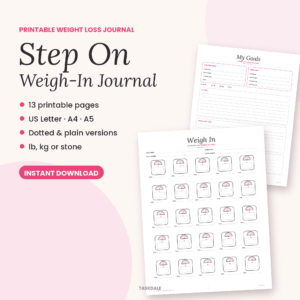
Step On Weigh-In Journal
Price: $1.29 | Best for: a simple printable weigh-in log
A printable weight loss tracker built around weigh-ins. A good fit if you want something lighter than a full planner, or if you want a second log to keep alongside a bigger system.
Pairing your 52 week weight loss tracker with other tools
A weekly weigh-in in your 52 week weight loss tracker tells you where you are. It doesn’t tell you why. Pairing your tracker with a few other simple tools fills in the story.
A food or meal log, even loosely kept, helps you see the link between meals and weigh-ins. A habit tracker shows how often you walk, sleep well or drink water. And a progress chart for pounds lost makes the milestones feel visible, which is a nice boost on a flat week.
You don’t need all of them. Choose one extra tool that fits how you like to work. If you love charts, get one with a pounds-lost chart. If you like to write, pick a journal. Too many sheets and the whole system gets heavy.
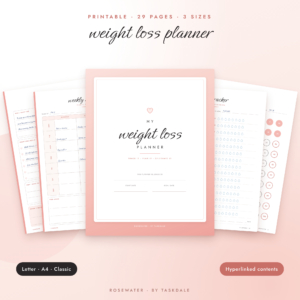
Rosewater Printable Weight Loss Planner
Price: $2.19 | Best for: a short tracker, journal and pounds lost chart
A 29-page printable with a weight loss tracker, journal pages and a pounds lost chart. It comes in US Letter, A4 and Classic sizes. Handy as a companion to a weekly weigh-in log when you want a place to write and a chart to color in.
52 week tracker options compared
| Product | Format | Price | Best for | Link |
|---|---|---|---|---|
| Scale Story 52-Week Weight Loss Tracker | Fillable PDF weight log, progress graph and Excel tracker | $1.67 | A full year of weekly weigh-ins | View |
| Step On Weigh-In Journal | Printable weight loss tracker | $1.29 | A simple second weigh-in log | View |
| Rosewater Printable Weight Loss Planner | 29-page printable, Letter, A4 & Classic | $2.19 | Journal pages and a pounds lost chart | View |
Mistakes that derail a year of weight loss tracking
A few traps catch people again and again.
Weighing daily and reacting to every change is the big one. It’s exhausting, and it makes normal fluctuations feel like failures. Weekly is plenty for most people.
Setting a deadline that’s too tight is another. “Lose it all by summer” sounds motivating and then turns into a crash plan. A year is long. Use it.
Skipping the review is a quieter mistake. A 52 week weight loss tracker you never read back is just a list of numbers. Spend five minutes each quarter reading your notes, and you’ll learn more than from any article, including this one.
The last one is going it alone with no support at all. Tell one person. Share your goal, not your numbers if you’d rather keep those private. A simple “how’s it going?” every few weeks makes a difference.
Frequently asked questions
What is a 52 week weight loss tracker?
It’s a chart or log with 52 spaces, one for each week of the year, where you record your weigh-in. Many include a progress graph so you can see the trend at a glance. The slow pace suits people who want steady progress and not quick fixes.
How often should I weigh myself?
Once a week works well for most people. Weight swings from day to day with water and food, so daily numbers can mislead. Pick one day, weigh at the same time, and write it in the tracker. Check with a doctor if you’re unsure.
How much weight can I lose in a year?
That depends on your body, habits and health, so there’s no single answer. Many health groups favor slow, steady loss over fast loss. A doctor or dietitian can help set a goal that fits you, and your tracker will show how it goes.
What if I miss a week?
Leave the square blank or write a short note, then carry on the next week. A missed week doesn’t spoil the year. The graph can handle gaps, and the notes about why you missed it often help later.
Can I use a printable tracker if I prefer apps?
Yes. Many people use both. A printable sits on the fridge or in a binder where you can see it, and it has no notifications. If you like spreadsheets, some trackers include an Excel version as well.
Your next step
So, here’s the plan. Pick your weigh-in day, write your starting weight in week one, and put the date in your calendar. If you want a ready-made year, the Scale Story 52-Week Weight Loss Tracker is $1.67 and includes a weight log, a progress graph and an Excel tracker. Print it tonight, and week one takes care of itself.