Some businesses ask for a warehouse, a staff and a loan. This one asks for a machine, a van or a trailer, and the nerve to knock on doors. That is a big reason people look up how to start a pressure washing business: the entry cost is lower than in many trades, and the before and after photos sell the job for you. But low cost does not mean no planning. The people who last are the ones who price jobs properly, protect themselves with paperwork, and treat it like a business from day one. Here is how to do that, with costs, pricing and paperwork laid out in plain terms.
Quick picks
| Product | Best for | Price | Link |
|---|---|---|---|
| Rinsewell Pressure Washing Business Kit | Contracts, intake forms, proposals and a quote calculator | $7.59 | View |
| Business Launch Planner | Working out startup costs, pricing and cash flow | $14.99 | View |
| Clarity Business Plan Kit | Writing a simple plan with a financial forecast | $5.25 | View |
How to Start a Pressure Washing Business: The Short Version
Strip away the detail and the path looks like this. Decide what you will clean. Work out what it costs to run. Set prices that cover those costs and pay you. Get your legal and insurance basics in place. Then find customers and send clean paperwork every time.
That is the skeleton. The rest of this guide puts muscle on it. If you only remember one thing, remember this: most new owners underprice, work too hard for too little, and quit by the second summer. A bit of math up front prevents that.
Step 1: Pick Your Jobs and Your Area
Pressure washing covers a lot of ground. Driveways and walkways. House siding. Decks and fences. Patios. Commercial storefronts. Each job type needs slightly different gear, time and skill.
When people ask me how to start a pressure washing business, my first answer is to start small and local. Pick two or three job types and one area you can drive across in twenty minutes. A tight service area saves fuel and wasted hours. You can widen it once you know what a typical day looks like.
Walk your own neighborhood with fresh eyes. Look at the driveways. Look at the green fences. Those are your first customers, and you can see them from the sidewalk.
Step 2: Know Your Startup Costs
How to start a pressure washing business on a budget comes down to knowing your costs. They vary by place and by how much you buy new or used, so I won’t pretend there is one number. What I can do is list the buckets, so nothing catches you by surprise.
- The machine itself, plus hoses, wands and nozzles
- Surface cleaners and extension poles for flat areas
- Cleaning solutions and safe handling gear
- A vehicle or trailer to carry water and equipment
- Insurance and any local license or registration
- Marketing basics: flyers, door hangers, business cards, a simple phone listing
- A small cash cushion for slow weeks and repairs
Write each bucket down and attach your best local price. Then add 10 to 15 percent for the stuff you forgot. You will forget something. Everyone does.
A planner helps here, because startup money is easy to scatter. A tool that lays out startup costs, pricing and cash flow in one place makes it harder to fool yourself.
Step 3: Price Your Work So It Pays
This is where businesses are won and lost. A common beginner trap is copying the cheapest price in town. That price usually covers the machine and nothing else, no insurance, no repairs, no wage for you.
Start with your costs. Work out an hourly figure that covers your equipment wear, fuel, insurance, supplies and your own pay. Then think about how long each job takes. A 600 square foot driveway takes a certain number of minutes, a two-story house takes more, and a deck with stains takes longer than a bare one.
Many operators price by square foot for flat surfaces and by the job for houses and decks. Others add a minimum charge so a tiny job still covers the drive and setup. That minimum is a quiet lifesaver. Without it, you can spend an hour driving to earn twenty minutes of money.
A quote calculator in a spreadsheet makes this quick. You enter the size, pick the surface, and it gives you a figure you can adjust. We’ll look at pricing in more depth in a separate guide, but the key idea is simple: price from your costs, not from your competitor’s flyer.
Step 4: Sort Out the Legal and Insurance Basics
This part is dull and important. Rules differ by country, state and city, so I can only point you to the right questions. This is general information, not legal advice, so check with your local authorities or an adviser.
Ask these four questions:
- Do I need to register the business, and in what form?
- Do I need a license or permit to do exterior cleaning work here?
- What insurance covers damage to a customer’s property, and what covers me if someone is hurt?
- Are there rules about where wash water can drain?
That last one surprises people. Runoff from washing can carry cleaner, dirt and oil, and some places limit where it goes. A short call to your local council or environmental office can save you from a fine.
Insurance deserves a second look. A slip with the wrong nozzle can etch a deck or chip paint. Having cover in place before the first paid job is much cheaper than having it after the first claim.
Step 5: Get the Paperwork Right
Knowing how to start a pressure washing business on paper matters as much as owning the machine. Here is where a lot of new owners cut corners, and where the best ones quietly pull ahead. Paperwork is not about looking fancy. It is about making sure everyone agrees on what is being done, for how much, and what happens if something goes wrong.
The documents you will use again and again
A client intake form collects the basics: name, address, contact details, the areas to clean, and any notes like pets, sprinklers or fragile surfaces. A proposal or estimate puts the price and scope in writing. A contract spells out terms. An invoice asks for payment once the job is done.
That is four documents, and you will use them on nearly every job. Writing them from scratch for each customer wastes hours. Reusing a clean template saves those hours and makes you look sharp.
Photos belong in your routine as well. Take a before and after of every job. They are proof of your work, protection if a customer disputes a mark, and free marketing for your page.
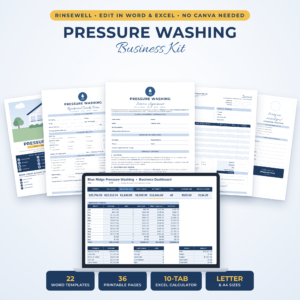
Rinsewell Pressure Washing Business Kit
Price: $7.59 | Best for: new pressure washing owners who need their paperwork and marketing in one place
The listing describes editable contract, client intake forms, proposal, invoice and estimate templates for Word, plus an Excel quote calculator. It also lists flyers, door hangers and business cards, in US Letter and A4. It covers the paper side of the business in a single download.
How to Start a Pressure Washing Business Without Burning Cash
A business plan sounds like something for banks. For a small operation it is closer to a to-do list with numbers. It forces you to write down who your customers are, what you will charge, and how many jobs you need per month to cover your costs.
Try this simple exercise. Take your monthly costs, including your own pay. Divide by your average job price. That tells you roughly how many jobs you must book each month just to break even. If the number scares you, good. Better to learn it on paper than in your bank balance.
Seasonality matters too. In many places, washing slows in winter. Build a plan that covers the quiet months, whether that means saving during summer or adding a winter service such as cleaning gutters or storefronts, where that suits your area.
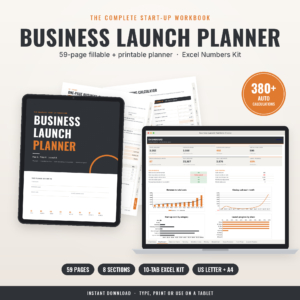
Business Launch Planner
Price: $14.99 | Best for: working out startup costs, pricing and cash flow before you buy equipment
This is a fillable startup planner in PDF, plus an Excel calculator for startup costs, pricing and cash flow, in US Letter and A4. It suits anyone who wants the numbers on paper before spending a cent.
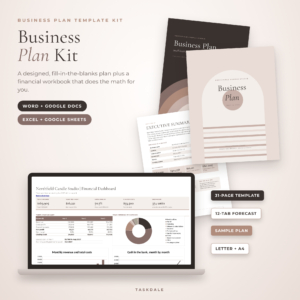
Clarity Business Plan Kit
Price: $5.25 | Best for: writing a simple business plan with a forecast
Clarity is a business plan template for Word and Google Docs with an Excel financial forecast. If you want a written plan to guide your first year, or to show a lender or partner, this fits the job.
Comparing the Tools for Your First Year
| Product | Format | Price | Best for | Link |
|---|---|---|---|---|
| Rinsewell Pressure Washing Business Kit | Word templates, Excel quote calculator, US Letter and A4 | $7.59 | Contracts, forms, proposals, invoices, flyers | View |
| Business Launch Planner | Fillable PDF, Excel calculator, US Letter and A4 | $14.99 | Startup costs, pricing and cash flow | View |
| Clarity Business Plan Kit | Word, Google Docs, Excel forecast | $5.25 | A written plan with a financial forecast | View |
You do not need all three. Many new owners start with the Rinsewell kit because it covers what they will touch every day, then add a planning tool if the money side feels shaky.
Step 7: Find Your First Ten Customers
Skip the big ad budget. Your first ten customers come from simple, free moves.
Start with people you know. Tell family, friends, neighbors and old coworkers what you do, and ask them to pass your name on. Offer to do a driveway at a fair price in exchange for photos and a short review. Real photos beat stock images every time.
Next, go door to door with a door hanger on a street where you have just finished a job. “We just cleaned your neighbor’s driveway” is a strong opener, and it is true. Local community groups and online neighborhood pages help as well. Post your before and after shots and answer questions honestly.
Last, ask every happy customer for a referral. It costs nothing, and it works because people trust a neighbor more than an ad.
Safety and Care on the Job
Safety is part of how to start a pressure washing business the right way. High pressure water can cut skin, strip paint and push water where it should not go. Wear eye and foot protection, keep the nozzle pointed away from people and pets, and read the machine’s manual before the first use. Test a small hidden patch before cleaning a surface you do not know. Soft wood, old mortar and painted siding need a gentler hand.
When in doubt, go slower and lower pressure. A customer can forgive a slow job. They cannot forgive a scarred deck.
Frequently Asked Questions
How much does it cost to start a pressure washing business?
It depends on your area and on whether it is new or used gear. The main costs are the machine and accessories, a way to carry them, cleaning supplies, insurance, and basic marketing. Add a cash cushion for repairs and slow weeks. A planner helps you total it.
Do I need a license to pressure wash for money?
That varies by location. Some places require a business registration or a trade permit, and others do not. This is general information, not legal advice. Contact your local authorities to confirm what applies to you before taking paid work.
How do I price pressure washing jobs?
Start from your costs and the pay you want per hour, then estimate the time each job needs. Many owners price flat surfaces by square foot and houses by the job. A minimum charge keeps small jobs worth the drive.
What paperwork do I need for each job?
Most owners use an intake form, an estimate or proposal, a simple contract, and an invoice. Photos before and after are a smart addition. A ready-made kit saves you from writing these again for every customer.
Can I run this alongside a full-time job?
Many people do, starting with weekends and evenings. Keep the service area small, book jobs ahead, and be honest with customers about your schedule. Once your bookings fill your days, you can decide whether to go full time.
Your Next Step
So, here is the plan: write your cost buckets this week, set a price that pays you, and get your paperwork ready before the first call comes in. If you want the paperwork done in one go, start with the Rinsewell Pressure Washing Business Kit for $7.59. That is how to start a pressure washing business without guessing. Then wash your own driveway, take the before and after, and put it on your flyer.