The phone rings. A homeowner wants the driveway done, maybe the front steps too, and asks the question you dread: “How much?” You glance at the clock, guess a number, and hope it works out. An hour later you realize the drive across town ate half your profit. Pressure washing prices feel hard because every yard, driveway and deck looks different. But the method for setting them is the same every time, and once you have it, you can answer that phone call in a minute with a straight face. This guide shows how to quote driveways, houses and decks, step by step, with a quote calculator to do the sums.
Quick picks
| Product | Best for | Price | Link |
|---|---|---|---|
| Rinsewell Pressure Washing Business Kit | An Excel quote calculator plus proposals and invoices | $7.59 | View |
| QuoteBloom Price Quote Template | General quotes with auto calculations and a quote tracker | $4.99 | View |
| Ledgerline Business Forms Kit | Estimate, quote and invoice forms for Word and Excel | $2.99 | View |
Why Pressure Washing Prices Go Wrong
Most new owners set their rates in one of two ways. They copy a number they saw on someone’s flyer, or they pick a figure that sounds fair and hope. Both approaches ignore the thing that actually decides if you make money: your costs and your time.
Here is a small scene. Say you charge $120 for a driveway because that “feels right.” The job takes two hours on site, plus forty minutes of driving, plus twenty minutes loading and unloading. That is three hours for $120. After fuel, water, cleaner and wear on the machine, you may be earning less than a basic hourly job, with more risk and more sore shoulders.
Underpriced work also traps you. Once a customer pays a low price, they expect it forever, and their neighbors hear about it. Raising your pressure washing prices later is possible, but it feels awkward. It is far easier to start at a fair number.
The Simple Formula Behind Pressure Washing Prices
You do not need a business degree. You need three numbers.
Number one: your hourly cost. Add up what it costs to run the business for a month. That includes insurance, fuel, cleaner, equipment repairs and replacements, phone, marketing, and your own wage. Divide by the hours you really work on jobs, not the hours you wish you worked. The result is your hourly figure.
Number two: your time on the job. This means the full time, not just the washing. Include travel, setup, cleaning, rinsing, packing up and any chat with the customer at the end.
Number three: your margin. A little extra on top covers surprises, slow weeks and growth. Without a margin, one bad week wipes you out. A cracked pump or a flat tire on a Tuesday should dent your plans, not end them.
Multiply your hourly figure by the job’s time, then add your margin. That is your price. Everything else in this guide is about estimating the time more accurately and presenting the number well.
These figures are illustrative, so use your own costs. The method is what counts.
How to Quote a Driveway
Driveways are the bread and butter of pressure washing. They are flat, easy to measure, and customers can see the result at a glance.
Measure the length and width, multiply, and you have the square footage. A single-car drive and a three-car drive are very different jobs, so never quote by “driveway” alone. Ask for the size or measure it yourself.
Then think about condition. Light dust is quick. Oil stains, deep moss and years of black buildup take more time and more cleaner. Many owners use two or three condition levels, such as light, normal and heavy, and apply a different rate to each.
A surface cleaner, which is a spinning head that covers flat ground fast, changes your time per square foot a lot. If you own one, your driveway price can reflect that speed. If you wash with a wand only, it takes longer and your rate should account for it.
Finally, add a minimum charge. A tiny walkway should not cost the same as a drive-by. It also should not cost you money. A minimum makes sure you never lose money on the trip itself.
How to Quote a House
House washing is more about height and detail than about floor area. A single-story ranch with simple siding is a short job. A two-story home with trim, windows, a porch and tight corners takes much longer.
Most people price houses by the job instead of by the square foot. To do that fairly, walk around and note the stories, the siding type, how dirty it is, and any hard spots like landscaping you need to protect. Take photos before you quote. They help you remember, and they protect you if someone says a mark was there already.
Siding matters. Some materials need gentle washing and a softer touch, so the job is slower and carries more risk. Be honest with yourself about what you can do safely. A job you are not sure about is a job you should price higher, or decline.
Plants, pets and open windows add time too. You may need to wet down shrubs, move furniture or ask the customer to close windows. All of that is time, and time is money.
How to Quote a Deck
Decks are the trickiest of the three. Wood is soft, and a nozzle held too close can scar it. Stains and sealers add steps. Many deck jobs include more than washing, such as cleaning, brightening and sealing, and each step has its own time and materials.
Measure the surface area, then add the railings, steps and any furniture you must move. Railings and spindles take far longer than flat boards, so count them separately or add a clear allowance.
Ask what the customer wants. Cleaning only is quick. Cleaning plus sealing is a bigger job with drying time, and weather can delay it. Spell out in the quote whether sealing is included, and what happens if rain interrupts.
Wood condition changes everything. Old, grey, splintery boards need care and may not come out looking new. Say so before you start. Under-promise, then deliver a bit more.
Pressure Washing Prices at a Glance
| Job | How owners often price it | What changes the price |
|---|---|---|
| Driveway | By square foot, with a minimum charge | Size, stains, moss, access, surface cleaner use |
| House | By the job, after a walk-around | Stories, siding type, dirt level, windows, landscaping |
| Deck | By square foot plus an allowance for rails and steps | Wood condition, sealing, furniture, weather delays |
This table shows approaches, not dollar amounts, because your costs and your area decide the numbers. Set yours from your own math.
Use a Quote Calculator, Not Your Memory
Doing this in your head works for the first week. After that you will forget a step, round the wrong way, and send a number you regret. A quote calculator in Excel fixes it. You type the size, pick the surface, set the condition, and get a total you can adjust.
It also keeps your pressure washing prices consistent. Two customers with the same driveway get the same quote, which keeps you fair and keeps neighbors from comparing notes and feeling cheated.
Here are three Taskdale products that help. I’m describing only what each listing says, so please read the full page before you buy.
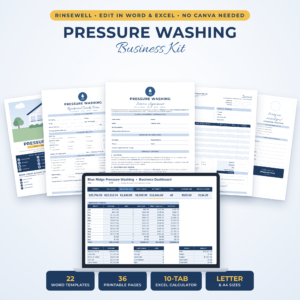
Rinsewell Pressure Washing Business Kit
Price: $7.59 | Best for: pressure washing owners who want a quote calculator and matching paperwork
The listing mentions an Excel quote calculator, plus editable contract, client intake forms, proposal, invoice and estimate templates for Word. It also includes flyers, door hangers and business cards, in US Letter and A4. It is built for this trade, so the forms fit the work.
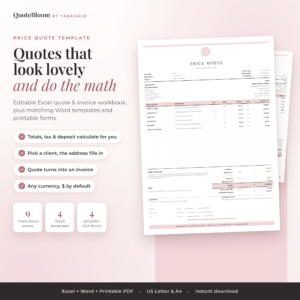
QuoteBloom Price Quote Template
Price: $4.99 | Best for: sending clear quotes and tracking which ones were accepted
QuoteBloom is an editable quote and invoice template for Excel and Word. The listing mentions auto calculations, a client list, a quote tracker and a printable estimate form. If you want to see at a glance which quotes turned into jobs, the tracker helps.
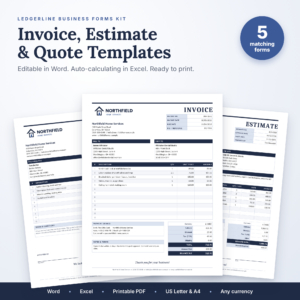
Ledgerline Business Forms Kit
Price: $2.99 | Best for: a low-cost set of estimate, quote and invoice forms
This kit lists editable invoice, estimate and quote templates for Word and Excel, with a receipt, a purchase order and a printable PDF. It is a general set that works for many trades, including cleaning.
Comparing the Quoting Tools
| Product | Format | Price | Best for | Link |
|---|---|---|---|---|
| Rinsewell Pressure Washing Business Kit | Word templates, Excel quote calculator | $7.59 | Pressure washing quotes, contracts and invoices | View |
| QuoteBloom Price Quote Template | Excel, Word | $4.99 | Quotes with a client list and tracker | View |
| Ledgerline Business Forms Kit | Word, Excel, printable PDF | $2.99 | General estimate, quote and invoice forms | View |
A Worked Example With Made-Up Numbers
Let’s run one driveway through the formula. Pretend your hourly cost comes out at $60. The driveway is 20 feet by 30 feet, so 600 square feet. With a surface cleaner you expect about an hour of washing, plus 40 minutes of driving and 20 minutes of setup and packing. That is two hours in total.
Two hours at $60 gives $120. Add a 15 percent margin and you land near $138. Round it to a clean figure and quote it with the scope in writing. If the driveway turns out to be oil-stained, you would have noted that at the walk-around and priced the extra time up front.
Again, the numbers here are only for show. Plug in your own and the method holds.
Presenting Your Price Without Flinching
Setting a number is half the job. Saying it with confidence is the other half. Many owners lose money not because their math is wrong, but because they apologize while quoting.
Put the price in writing, with the scope. “Wash driveway and front walkway, approximately 800 square feet, includes oil stain treatment” is clear. A phone number tossed out loud is not.
Give the customer a reason to say yes today, but do not discount by reflex. If someone asks for a lower price, try changing the scope instead. Drop the stain treatment, or skip the steps, and keep your rate. That way you protect your pressure washing prices and still offer a choice.
Add an expiry date. Fuel, cleaner and labor costs move, and a quote from last spring should not bind you this summer. Fourteen or thirty days is common.
Offer bundles gently. A customer who wants the driveway done may also want the house or deck. A package price for two or three surfaces saves you travel and setup, and saves them money in a way that still works for you.
And follow up. A short message two days after you send the quote catches the people who meant to reply and forgot.
Frequently Asked Questions
How do I set pressure washing prices?
Work out your hourly cost, including your own pay, then estimate the full time for the job, including travel and setup. Multiply the two and add a margin for surprises. Check the result against your minimum charge. Use your own numbers, not someone else’s flyer.
Should I charge by the hour or by the square foot?
Many owners charge by the square foot for flat surfaces and by the job for houses and decks. Hourly pricing is simple but can punish you for being fast. Whichever way you go, check that your effective hourly earnings still cover your costs.
What is a minimum charge?
It is the lowest amount you will accept for any job. It makes sure small tasks still cover the drive, setup and cleanup. Without one, a tiny job can cost you more than it pays. Choose a figure from your own costs.
How do I quote a dirty or stained surface?
Use condition levels. Light, normal and heavy are enough for most work. Heavy buildup or oil stains take more time and cleaner, so they carry a higher rate. Take photos before you quote and mention the condition in writing.
Do I need a written quote for every job?
It is smart to have one. A written quote lists scope, price and expiry, which prevents arguments later. A template makes it quick. This is general information, not legal advice, so check local rules if you have questions.
Your Next Step
So, here is the short version: work out your hourly cost, measure the job, add a margin, and put the number in writing. If you want a calculator and paperwork made for this trade, start with the Rinsewell Pressure Washing Business Kit for $7.59. Run your next three jobs through it and see how the numbers feel.